
Newsroom
Sterilization cycles in cGMP autoclaves: how to develop, select and optimize them
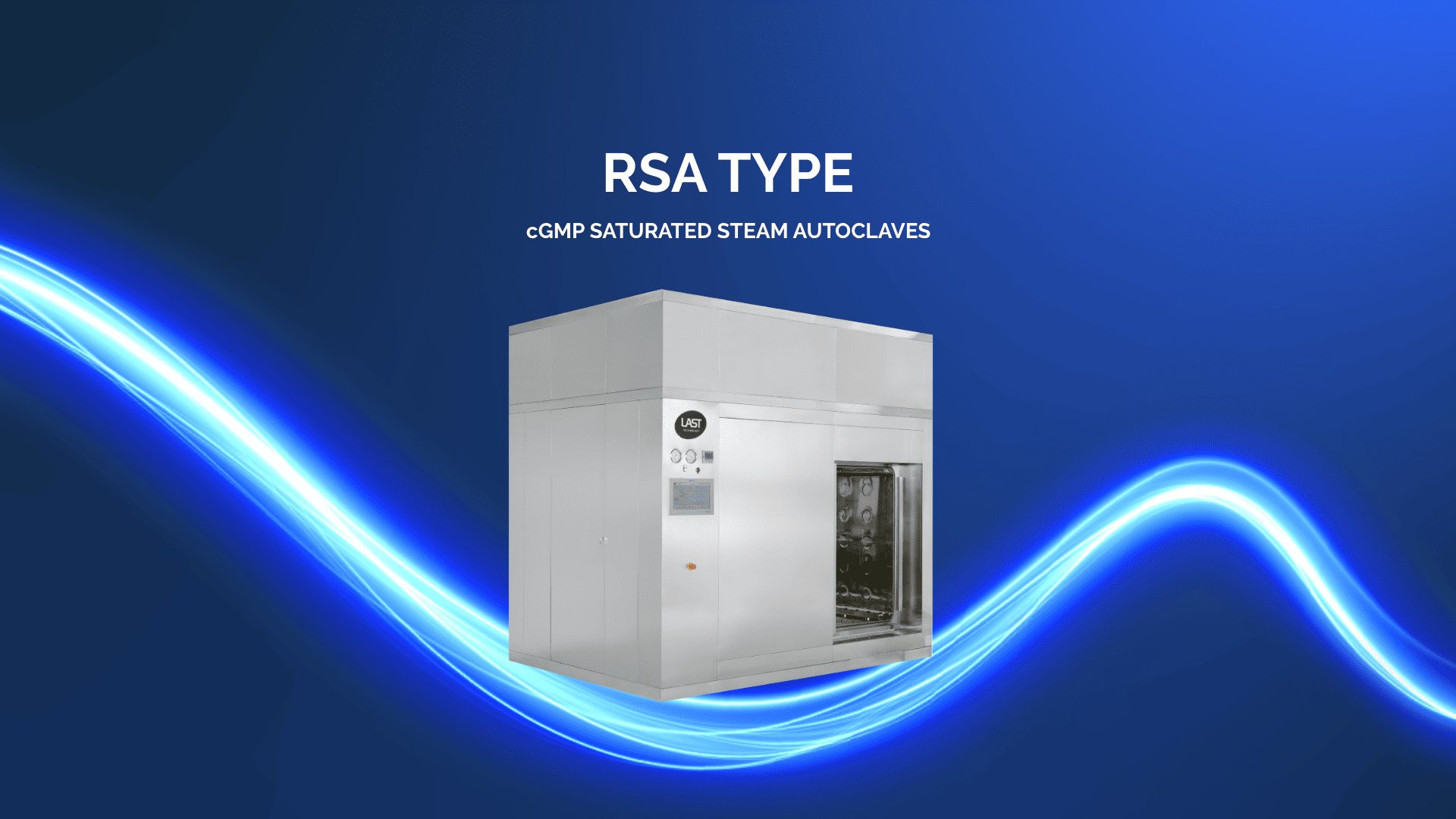
A sterilization cycle in an autoclave is a controlled sequence of phases (air removal, heating, equilibration, exposure, depressurization, cooling and, where required, drying) designed to deliver a validated microbial lethality to the load.
In a cGMP pharmaceutical environment, optimizing that cycle means cutting time, utility consumption and variability without compromising the sterility assurance level, product integrity or the validated state of the process.
Optimization is not simply a matter of shortening the plateau or raising the temperature. It requires an understanding of the load, of the bioburden (the microbial population present on the product before sterilization), of the hardest-to-sterilize location, of container behavior and of the critical process parameters. Only once those elements are defined can ramps, air removal, exposure and cooling be adjusted in a controlled and documentable way. This guide follows that path end to end: developing, selecting, controlling and optimizing the cycle, from an industrial pharmaceutical perspective.
| In brief The right cycle is selected on the basis of load, material, geometry, packaging, thermal sensitivity and microbiological objective.Total cycle time is not the same as exposure time: it also covers conditioning, heating, equilibration, plateau, depressurization, cooling and drying.Optimization must be verified at the hardest-to-sterilize location and under the worst-case load, meaning the least favorable load configuration among those validated.Overprocessing can only be reduced by correlating the physical parameters of the cycle with the lethality actually delivered to the load.Every change must go through change control and risk assessment, which determine whether verification, partial requalification or revalidation is required.Performance is measured with KPIs such as total cycle time, minimum F0, steam and water consumption, aborted cycle rate and reprocessing frequency. |
The phases of a steam sterilization cycle
Whatever the machine, a saturated steam cycle is built from distinct phases. Knowing them is the prerequisite for understanding where you can intervene without putting the result at risk.
Conditioning and air removal
Conditioning removes air from the chamber and from the load before heating properly begins, and it is the most critical step of the whole cycle. Residual air prevents saturated steam from making direct contact with the load and can produce air and steam mixtures at a temperature lower than the pressure temperature relationship would suggest. The consequences are cold spots, poor penetration and uneven distribution of lethality. Air can be removed by gravity displacement or through a sequence of vacuum and steam pulses. The second approach is normally required for porous loads, hollow devices and complex configurations, where air can remain trapped.
Heating and equilibration
Heating brings the load progressively to process temperature, while equilibration is the time needed for all monitored points to reach the defined band, generally referred to as equilibration time. The start of exposure should therefore not be defined by chamber temperature alone, but by the monitored points inside the load reaching the required conditions. An excessive equilibration time can signal uneven distribution, an unsuitable load configuration or insufficient penetration of the sterilizing medium. EN 285 sets a time limit of 15 seconds for sterilization chambers up to 800 liters, and 30 seconds for chambers with a larger capacity.
Exposure
During exposure the load is held under validated conditions for the time needed to deliver the required lethality. Temperature, time and, where applicable, F0 must be assessed at the hardest-to-sterilize location and not only in the chamber. F0 expresses equivalent lethality referred to 121.1 °C, but it does not replace microbiological assessment, load characterization and heat penetration studies. For the calculation and meaning of F0, see our detailed article on F0 lethality in saturated steam sterilization.
Depressurization and exhaust
Depressurization is the phase in which, once exposure is complete, pressure and temperature are brought back to values compatible with the product and its container. With liquids in vented containers, depressurizing too quickly can cause boiling, product loss and container failure.
Controlled cooling
Cooling returns the load to a temperature that can be handled safely and, with sealed containers, it is the phase that determines container integrity. Here counter-pressure has to be actively managed, using sterile air, introduced into the autoclave chamber. The aim is to limit the pressure differential between the inside of the container and the chamber, preventing deformation and breakage according to the one‑to‑one correlation between pressure and temperature for saturated steam.
Drying, where required
Drying, usually performed under vacuum, removes residual condensate that could otherwise become a route for recontamination. Not every load needs it, but for porous loads it is decisive for the quality of the result.
How a cGMP sterilization cycle is developed
Before a cycle can be optimized it has to be developed and shown to be robust. Development starts from the definition of the product and the load configuration, continues with heat distribution and heat penetration studies, and ends with the definition of critical parameters and acceptance criteria. In a cGMP process the cycle is not defined on chamber temperature alone: you have to establish how heat and the sterilizing medium reach the most difficult point of the load, taking density, mass, geometry, arrangement, materials and container into account.
Development activities typically include: defining the load type and representative configurations, identifying the expected bioburden and its resistance, choosing the microbiological strategy, mapping temperature distribution in the chamber, studying heat penetration into the load, identifying the slowest-to-heat location, setting the F0 or lethality target, challenging the process under worst-case conditions, defining critical process parameters and operating limits, and assessing repeatability and robustness.
Heat distribution and heat penetration: two different studies
A heat distribution study assesses temperature uniformity inside the chamber and confirms that the system can reach and hold consistent conditions across the process space. A heat penetration study measures the temperature actually reached inside the load and identifies the slowest-to-heat location. It is that location, not chamber temperature, that determines the real effectiveness of the cycle.
A thermally uniform chamber does not automatically mean uniform heat penetration into the load.
Porous materials, hollow devices, dense packs and large liquid volumes can heat at very different rates. This is why validation needs a probe layout and a set of measurement points matched to the complexity of the load.
Worst-case load
The worst case is the load configuration presenting the most difficult conditions for air removal, steam penetration, heat transfer or preservation of product integrity. It does not necessarily mean the heaviest load: depending on the process it may be maximum density, minimum or maximum product quantity, the most complex geometry, the largest container volume, the presence of hollow devices or porous materials, the least favorable position in the chamber, the most viscous product, the configuration that is hardest to cool, or the container least able to withstand a pressure differential.
Optimization must be demonstrated on the worst case, or on a configuration scientifically justified as representative. A time reduction verified only on a simple load is not enough to establish the robustness of the cycle.
Overkill, bioburden-based and combined approaches
The strategy depends on the product, the expected bioburden, the thermal resistance of the microorganisms involved and how well the load tolerates heat.
- Overkill approach: the cycle is designed with a wide lethality margin, far beyond the contamination normally expected. It is robust, but it can mean greater thermal exposure for the product.
- Bioburden-based approach: the cycle is built around the actual microbial load and the resistance of the organisms present or reasonably expected. It reduces overprocessing, but it demands solid microbiological data and tight bioburden control.
- Combined approach: physical and microbiological data are used together (F0, heat penetration studies, bioburden, biological indicators) to build a suitably robust strategy.
The choice should not be driven by the wish to shorten cycles, but by the ability to demonstrate scientifically and on paper that the required sterility assurance level is maintained.
How to select the cycle for the load
The first and most effective optimization is not technological but methodological: matching the cycle to the nature of the load. The wrong cycle produces failures, reprocessing and wasted time. A note on terminology, since naming conventions differ across the industry: cycles based on gravity displacement are often called gravity cycles, while those using vacuum and steam pulses appear as pre-vacuum, dynamic air removal or fractionated vacuum cycles. The configurations below are indicative, and suitability must always be confirmed through development, risk assessment and validation on the actual load.
| Load type | Generally applicable configuration | Critical aspects |
| Simple solids, non-porous and heat stable | Fractionated pre‑vacuum cycle, according to geometry and load. | Air removal, steam distribution, condensate drainage |
| Porous materials and hollow devices (cleanroom garments, filter cartridges, tubing, stoppers) | Fractionated pre-vacuum cycle (dynamic air removal) | Steam penetration, residual air, Bowie-Dick steam penetration test |
| Liquids in vented containers | Gravity displacement cycle. | Slowest-to-heat point, boil-over, evaporative loss |
| Liquids in small sealed containers (pre-filled syringes, vials) | Air and steam mixture cycle with counter-pressure | Thermal uniformity, pressure compensation, container deformation. Typical of combined cycles for liquids in sealed containers |
| Liquids in larger sealed containers (large volume parenterals) | Superheated water cycle | Heat transfer, water consumption, damp product at cycle end |
| Viscous liquids or products prone to stratification | Cycle with load rotation | Product homogeneity, sedimentation, heat exchange |
| Heat-sensitive materials (single-use plastics, thermolabile devices) | Low temperature sterilization | Material compatibility, process residuals, aeration. See the available pharmaceutical sterilization technologies |
| Anhydrous materials or items requiring depyrogenation | Dry heat | High temperature, thermal uniformity, endotoxin reduction. See the difference between sterilization and depyrogenation |
Temperatures of 121 °C and 134 °C are common reference points in saturated steam processes, but they are not universal recipes. Exposure time has to be defined against product, load, bioburden, microbiological resistance, packaging and the lethality target. The values below are indicative examples and should not be adopted as process parameters without dedicated development and validation work.
| Temperature | Indicative pressure | Typical minimum exposure time. | Typical use |
| 121 °C | about 1.1 bar gauge | 15-20 minutes | Standard loads, liquids, materials near the limit of heat stability |
| 134 °C | about 2.1 bar gauge | 3-4 minutes | Porous loads and heat-resistant items, faster cycles |
Exposure time is not the same as total cycle time.
A complete cycle also includes air removal, load heating, equilibration, depressurization, cooling and, where applicable, drying. In liquid cycles, heating and cooling are often the longest part of the process.
How to optimize the cycle
Once the cycle has been correctly selected, efficiency gains come from working on several fronts at once. Focusing on just one, for example shortening times while ignoring consumption, delivers only partial results.
Reducing cycle time while holding the lethality target
Any reduction in cycle duration has to be grounded in the lethality actually delivered at the hardest-to-sterilize location, identified during heat penetration studies. In development and performance qualification, probe distribution makes it possible to find the slowest-to-heat location and to correlate chamber parameters with the response of the load. In routine production, control may rely on product probes, reference sensors or validated physical parameters, depending on the process and the machine configuration.
The main levers are: shorter conditioning times, optimized vacuum pulses, better load distribution, reduced equilibration time, plateau minimized within the validated limit, controlled reduction of depressurization and cooling, and the removal of excessive margins that are not supported by data.
A shorter cycle is not necessarily a better cycle: it has to preserve lethality, robustness, product integrity and repeatability.
Standardizing the load
A great deal of reprocessing starts with a badly arranged load. Avoiding overloading, leaving clear paths for steam circulation and standardizing loading patterns reduces cold spots and makes the cycle repeatable. A documented loading pattern, with permitted ranges and clear operating instructions, is effectively a process parameter.
Optimizing the cooling phase
In liquid cycles, cooling often accounts for a significant share of total duration. Optimizing it means balancing the rate of heat removal against pressure control, container integrity and product uniformity. The available levers include cooling water flow rate and temperature, heat exchanger efficiency, water recirculation, counter-pressure control, flow distribution inside the chamber, container arrangement, and the temperature differential between product and cooling medium. Cooling too fast causes deformation, breakage or pressure swings; cooling too slowly increases duration, consumption and thermal exposure.
Reducing utility consumption for cycle
Energy efficiency should be assessed across the complete cycle, not only during the plateau. The main consumption items are clean steam, cooling water, electricity, compressed air and ancillary utilities. Practical actions include optimizing vacuum pulses, shortening heating and cooling phases, recovering condensate where the plant allows it, insulating chamber and pipework, improving heat exchanger performance, cutting aborted cycles and reprocessing, planning loads to avoid part-full cycles, and maintaining valves, drains and the vacuum system. The most useful figure is not the nominal consumption of the machine, but the actual consumption per conforming load processed.
Increasing equipment availability
Real productivity depends on downtime. Preventive maintenance, a pass-through layout supporting flow between areas of different classification, automation and predefined recipes all cut dead time between cycles and increase the number of loads that can be processed each day.
KPIs to measure cycle efficiency
A cycle can only be called genuinely optimized if the improvement is measurable. KPIs should cover both microbiological performance and operational efficiency.
| KPI | What it tells you |
| Total cycle time | Time from cycle start to cycle end |
| Conditioning time | Efficiency of air removal and pre-heating |
| Equilibration time | Time needed to bring all monitored points to the required conditions |
| Minimum F0 in the worst case | Lowest lethality delivered at the critical location |
| Steam consumption per cycle | Thermal efficiency |
| Water consumption per cycle | Cooling efficiency |
| Aborted cycle rate | Robustness and reliability of the process |
| Reprocessing rate | How often loads have to be run again |
| Deviations per batch | Process stability |
| Technical availability | Time the autoclave is actually available for production |
| Daily throughput | Number of conforming loads processed per unit of time |
The assessment should compare data collected before and after the intervention, with microbiological and quality acceptance criteria left unchanged.
Control, validation and change control
No optimization is acceptable if the cycle loses control, robustness or traceability. The minimum safeguards, summarized here and covered in depth in the linked resources, are: verification of air removal and steam penetration, chamber leak testing, control of air inlet filters, steam quality verification, calibration of critical sensors, recipe and access management, complete batch records and audit trails, periodic review of process data, deviation and trend management, and change control for every significant modification.
Any optimization of a validated cycle must be managed through change control.
A change to parameters, software, utilities, load configuration or critical components has to go through change control and risk assessment. Depending on the impact, this may call for documentary checks, functional testing, partial repetition of OQ, a new PQ or full revalidation. It is not correct to assume that every variation automatically requires a complete repeat of IQ, OQ and PQ, but it is equally wrong to modify a validated cycle without a formal assessment.
Cycle troubleshooting
When a cycle does not deliver the expected result, the cause is almost always one of a handful of recurring problems. The table below helps you move from symptom to action.
| Problem | Likely causes | Recommended actions |
| Wet load at cycle end | Insufficient drying, load too dense or poorly arranged, condensate not drained | Increase drying vacuum, reduce load density or correct the layout, check condensate drainage |
| Failed Bowie-Dick test | Residual air, chamber leak, non-condensable gases in the steam | Run the leak test, verify steam quality, check the vacuum pump |
| Cold spots or thermal deviation | Uneven load distribution, steam not saturated | Redistribute the load, verify steam quality and sensor calibration |
| Excessive equilibration time | Load too dense, uneven distribution, poor penetration | Review load configuration, probe positions, vacuum pulses and the heating phase |
| Wide F0 spread between probes | Uneven thermal distribution, cold spots, critical geometries | Review heat distribution, heat penetration and load repeatability |
| Liquid overheating or boil-over | Heating too fast, uncontrolled cooling | Gentler ramps, adequate counter-pressure, probe inside the load |
| Container deformed after cooling | Inadequate counter-pressure, cooling too fast | Re-tune pressure and cooling, check container strength and volume |
| Cycle times too long | Overprocessing driven by chamber temperature, slow ramp, excessive load | Control the cycle on F0 in the load, tune the heating ramp, optimize the loading pattern |
| Frequently aborted cycles | Unstable sensors, inconsistent utilities, over-tight recipe, insufficient maintenance | Review trends, alarms, utility quality and operating conditions |
| Results not repeatable | Non-standardized load, arrangement variability, product differences | Define loading patterns, permitted ranges and operating instructions |
Technical and regulatory references
Which references apply depends on the system, the product and the scope of each document. Here is what each of them covers.
- EN 285: technical requirements for large steam sterilizers. It is the usual reference for steam quality, meaning non-condensable gases, dryness value and superheat.
- ISO 17665:2024: development, validation and routine control of moist heat sterilization processes. It originates in the medical device field, so its principles need to be placed in the pharmaceutical manufacturing context.
- PDA Technical Report No. 1: the industry reference on validation of moist heat sterilization processes, covering cycle design, development, qualification and ongoing control.
- USP General Chapters on sterilization: including steam sterilization by direct contact, they provide the compendial framework for sterilization of pharmaceutical articles.
- EU GMP Annex 1: the framework for contamination control strategy and sterile manufacturing.
- EU GMP Annex 11 and 21 CFR Part 11: management of computerized systems, electronic records, access control and audit trails.
- ALCOA+: data generated by the autoclave must be attributable, legible, contemporaneous, original, accurate, complete, consistent, enduring and available.
In practical terms, traceability should cover at least the recipe used, load identification, actual parameters, alarms, deviations, manual interventions, signatures and approvals.
Conclusion
Optimizing a cGMP sterilization cycle is not about pulling one lever. It means holding several objectives together: the right cycle for each load, time and consumption cut to the minimum, and lethality that remains assured and validated throughout. The path starts with cycle development and selection, runs through load configuration and parameters, and closes with control, KPIs and maintenance of the validated state.
If you want to translate these principles into equipment tuned to your load and your standards, the cGMP saturated steam autoclaves by LAST Technology are engineered for compliance, straightforward validation and cycle optimization. Talk to our engineers for technical support on your process.

FAQ - Frequently asked questions
No, exposure time is not the same as total cycle time: it covers only the phase in which the load is held under sterilizing conditions. Total cycle time also includes air removal, heating, equilibration, depressurization, cooling and, where applicable, drying. In liquid cycles, heating and cooling are often the longest phases.
Related posts



mail
Subscribe to our newsletter
Stay up to date with the latest news from LAST Technology