
Newsroom
Saturated Steam cGMP Sterilization: LAST Technology’s RSA Autoclaves

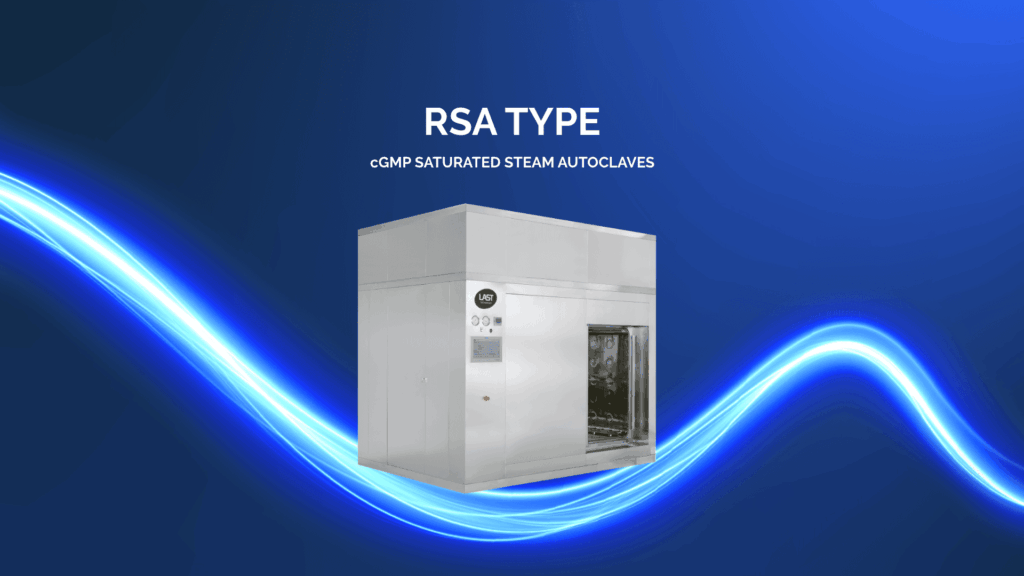
Within the core of sterile pharmaceutical manufacturing, saturated steam sterilization stands as the undisputed gold standard. Its relevance extends beyond microbiological effectiveness, encompassing strict compliance with international regulations such as Annex 1 and industrial validation standards. The RSA pharmaceutical autoclave series by LAST Technology is engineered to excel in this environment, providing a robust and reliable solution for the treatment of porous loads, non‑porous loads, and liquids in full cGMP conditions.
This document explores the fundamental principles of saturated steam sterilization, highlights the distinctive features of RSA autoclaves, and illustrates how these systems ensure the highest levels of safety, efficiency, and regulatory compliance—making them a preferred choice for the pharmaceutical and biotechnology industries.
Fundamental Principles of Saturated Steam Sterilization
Saturated steam sterilization inactivates microorganisms and spores through the denaturation of cellular proteins. The process occurs when steam comes into contact with a cooler load surface and condenses, releasing a significant amount of latent heat. This highly efficient energy transfer is what makes saturated steam such a powerful sterilizing agent.
The Critical Importance of Air Remova
The process cannot be effective unless complete air removal from both the chamber and the load is ensured. Air acts as a thermal insulator, preventing steam from reaching all surfaces and creating cold spots where sterilization cannot be guaranteed. RSA autoclaves address this challenge through:
- Vacuum fractionation cycles: A sequence of vacuum pulses and steam injections that remove air even from hollow components (e.g., tubing, filters) and porous materials, ensuring deep steam penetration.
- Integrated verification tests: Automatic programs for the Bowie–Dick Test, specifically designed for porous loads.
Sterility Assurance Level (SAL) and F0 Value
The cGMP objective is achieving a Sterility Assurance Level of 10⁻⁶, meaning a one‑in‑a‑million probability of a non‑sterile unit. This is calculated through the F0 value, which quantifies the lethal equivalent of a sterilization cycle in terms of exposure time at a reference temperature (typically 121.1°C).
RSA autoclaves continuously monitor Critical Process Parameters to ensure repeatability and process effectiveness:
- Pressure and temperature: Precisely controlled according to the saturated steam curve to maintain optimal sterilization conditions.
- Exposure time: Essential for F0 calculation and for ensuring the required microbial inactivation.
- Steam quality: Compliance with non‑condensable gas and superheat tests according to EN 285, ensuring clean, impurity‑free steam.
RSA Autoclaves: Versatility, Performance, and cGMP Design
RSA autoclaves by LAST Technology are engineered to handle a wide range of pharmaceutical applications, offering validated solutions for different load types:
- Components: Stainless‑steel machine parts, instruments, laboratory glassware.
- Porous materials: Cleanroom garments, cartridge filters, rubber stoppers.
- Liquids: In vented or sealed containers such as syringes and vials.
Technical Features and Hygienic Design
The engineering of RSA autoclaves is intrinsically oriented toward cGMP compliance and ease of validation, ensuring hygienic construction, process reliability, and full traceability.
| Feature | RSA Specifications | cGMP Advantage |
|---|---|---|
| Chamber material | AISI 316L Stainless Steel | Maximum corrosion resistance and long‑term durability. |
| Surface finish | Ra≤0.35 µm | Optimal cleanability, prevention of microbial growth, and elimination of stagnation points. |
| Steam control | PID modulating valve | Excellent thermal uniformity (≤ ±0.4 °C) and precise process control. |
| Doors | Horizontal/Vertical sliding | Space optimization and biosafety assurance (Pass‑Through) between classified areas. |
| Condensate management | Convergent chamber floor and continuous condensate drainage | Prevention of “non‑sterility” zones and maintenance of optimal steam‑to‑load contact. |
Validation and Data Integrity (ALCOA+): The Core of Compliance
A modern pharmaceutical autoclave is not merely a thermal device but a sophisticated data‑management system. The RSA series supports the entire validation lifecycle—from Installation Qualification to Operational and Performance Qualification—through features specifically engineered for regulated environments.
Infrastructure Prepared for Validation Activities
- Physical provisions: A minimum of two dedicated 1.5” check‑ports allow the insertion of thermal mapping probes and pressure‑testing instrumentation without compromising chamber integrity.
- Data integrity: Batch record management and audit‑trail functions comply with ALCOA+ principles and with FDA 21 CFR Part 11 and EU Annex 11 requirements, ensuring complete traceability of every event, alarm, and operator action.
- Automation and control: Advanced control platforms designed for full 21 CFR Part 11 and Annex 11 compliance ensure secure, reliable, and tamper‑resistant electronic data.
Excellence in cGMP Saturated Steam Sterilization
Investing in an RSA autoclave from LAST Technology means adopting a solution that not only meets but often exceeds the highest standards of the pharmaceutical industry. With precise control of critical parameters, superior hygienic design, and engineering focused on validation and data integrity, RSA autoclaves set the benchmark for modern saturated steam sterilization. They streamline regulatory compliance, reduce the risk of non‑conforming batches, and optimize operational efficiency while ensuring maximum product safety.

Common Questions on RSA Autoclaves and Saturated Steam Sterilization
Cold condensate can create “non‑sterile” zones within the load, as it may become a medium for bacterial proliferation. RSA autoclaves feature an inclined chamber floor and a continuous condensate‑drainage system. The parametrized cycle also ensures effective drying at the end of sterilization, even for loads of different types and materials.
Related posts


mail
Subscribe to our newsletter
Stay up to date with the latest news from LAST Technology