
Newsroom
Direct or indirect heating in cGMP clean steam generators: comparison and selection criteria
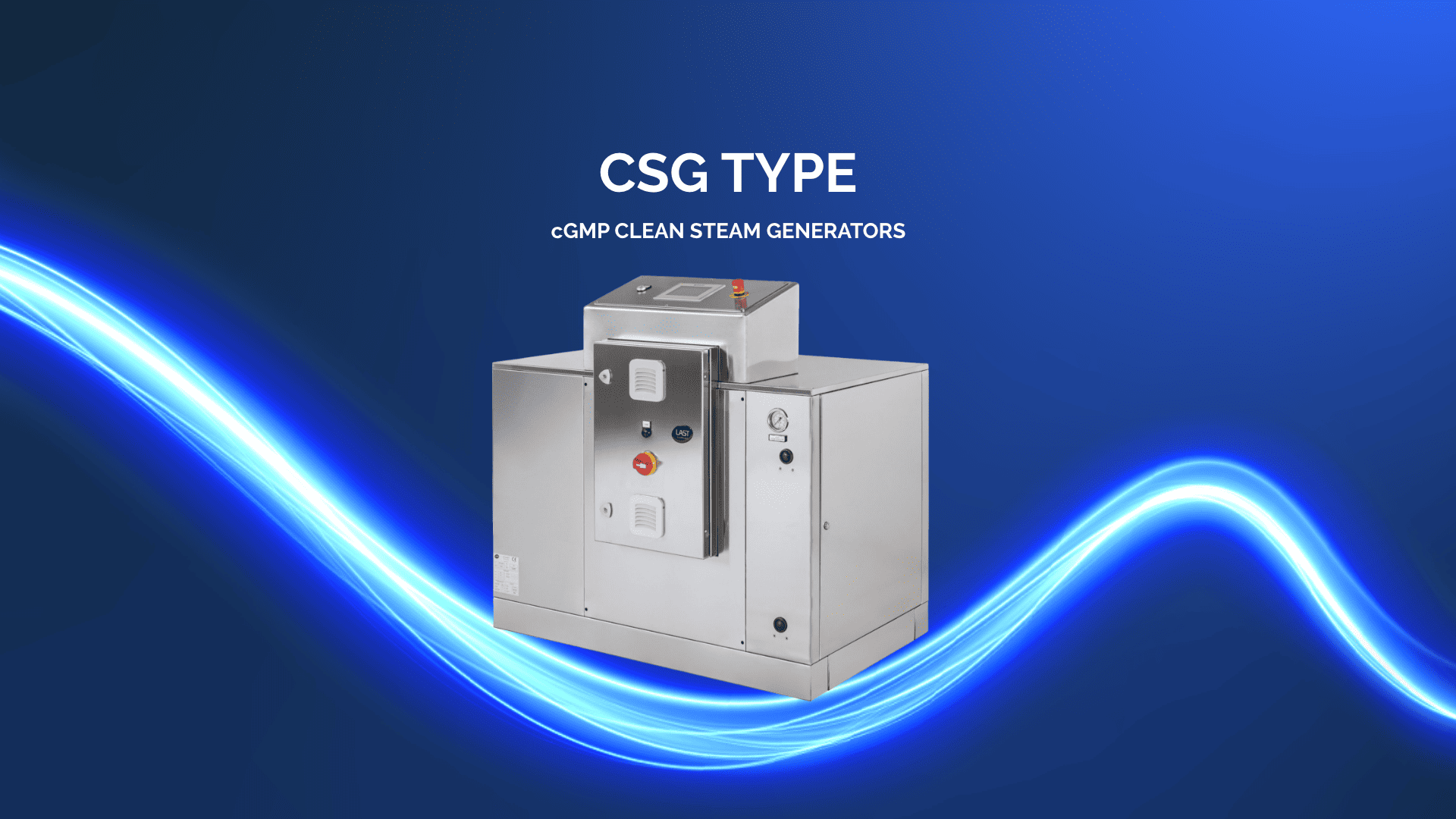
In cGMP clean steam generation, heat can be supplied in two ways: direct, or electric, with heating elements immersed in the feed water, or indirect, using industrial steam, where plant steam transfers heat through a closed coil without ever mixing with the clean circuit.
The choice between the two configurations depends on the utilities already available on site (electrical power or an industrial steam network), on the required capacity and on energy costs. It does not depend on the quality of the steam produced, which meets cGMP requirements in both cases when filtration and condensate separation are properly specified.
| Configuration | In one sentence |
| Direct (electric) | Heat is generated by heating elements immersed in the water on the clean side. |
| Indirect (steam) | Heat is transferred by industrial steam flowing through a closed coil. |
How clean steam is produced: the heat exchange principle
A clean steam generator produces saturated steam (typically at 121-134 °C) through heat exchange between clean feed water and a heating element. What changes between the two configurations is the heat source, not the operating principle. Feed water is purified water (PW), up to water for injection (WFI) in highly critical applications.
Direct, or electric heating
The heating elements (electric resistances) are immersed directly in the water, housed on the inspection flange of the vessel. Heat passes from the elements to the water with no intermediate fluid. A point worth noting in a pharmaceutical context: the sheath of the heating elements is still a clean-side contact surface, so material selection (suitable steels and alloys, passivation) must be treated as for any other process surface.
When it makes sense:
- Plants with no industrial steam network available.
- Limited clean steam demand, serving a single user such as one machine or one department.
- Where a self-contained, quick installation is required.
To consider: the cost of electricity and the electrical power to be installed, which grows as the required capacity grows.
Indirect steam clean steam generators: heating with industrial steam
In an indirect steam clean steam generator, industrial steam (not clean steam) flows inside a coil, a seamless tube immersed in the feed water. It transfers heat by conduction and stays confined within the coil: it never comes into contact with the water or with the clean steam produced. The coil acts as a physical barrier between the utility fluid and the clean circuit.
When it makes sense:
- Plants that already have an industrial steam network (central boiler).
- High demand or continuous clean steam production.
- Lower running costs, because it uses steam the site boiler already produces.
To consider: the dependency on the site boiler and its availability.
The two configurations at a glance
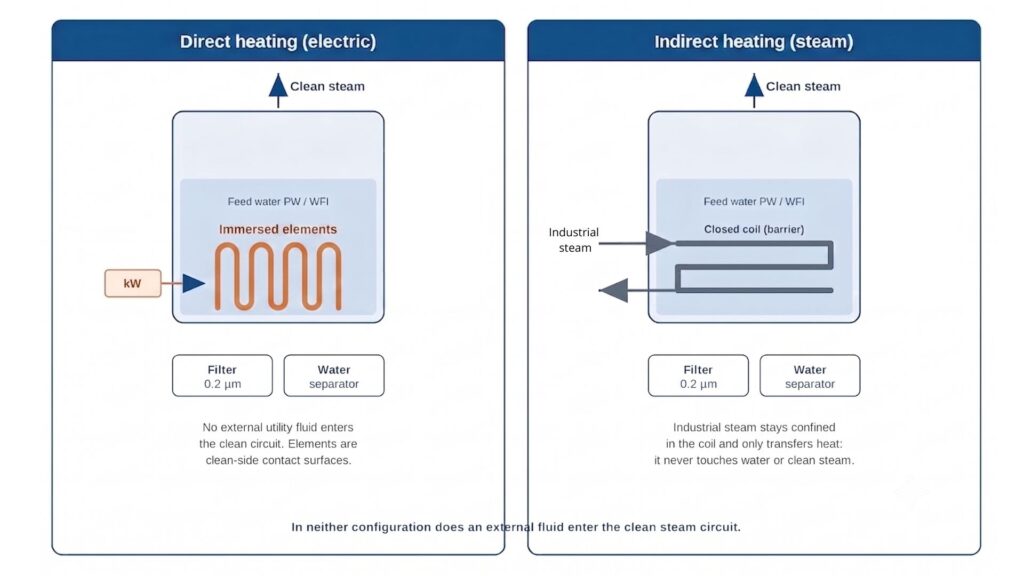
Figure 1. Direct (electric) vs indirect (steam-heated): in neither configuration does an external fluid enter the clean steam circuit.
Direct vs indirect: side-by-side comparison
| Criterion | Direct (electric) | Indirect (steam) |
| Heat source | Immersed electric heating elements | Industrial steam in a coil |
| Contact with external utility | No external utility fluid in the clean circuit; elements immersed on the clean side | Industrial steam confined in the coil, never touching water or clean steam |
| Utility required | Electrical power | Industrial steam network |
| Typical capacity | Limited demand, single user | High demand, continuous operation |
| Running cost | Driven by electricity price | Uses steam from the existing boiler |
| Installation | Self-contained | Requires the industrial steam network |
What does not change between the two
The heat source is the only real variable. Everything else stays the same in both configurations:
- Feed water quality (PW or WFI, according to intended use).
- Materials and surface finish of the clean-side circuit.
- The need for condensate separation and, where required, 0.2 µm final filtration.
- Qualification and steam quality testing.
- cGMP traceability and control requirements.
How to choose the right configuration
The right question is not which one is better in absolute terms, but which one fits the plant. Three guiding criteria: availability of industrial steam, capacity and continuity of demand, and the energy cost profile.
| Plant scenario | Most likely choice | Reason |
| No site boiler available | Direct, electric | Self-contained installation |
| A single machine or department to serve | Direct, electric | Simplicity and independence |
| Industrial steam network already in place | Indirect | Uses a utility that already exists |
| Continuous demand or high capacity | Indirect | Better suited to high thermal loads |
| High electricity cost | Indirect, to be assessed | Possible operating cost advantage |
| Utility redundancy required | Case by case | Depends on the URS and risk assessment |
Short answer. Direct electric heating is preferable when no industrial steam network is available or when demand is limited. Indirect steam heating is preferable when the site already has industrial steam and clean steam demand is high or continuous.
The real cost: beyond the price of energy
For a project engineer the decision does not end at “electric or steam”. The economic variables that matter include installed electrical power, the price per kWh, the real cost of steam produced by the boiler, boiler efficiency, condensate recovery, the usage profile (continuous, intermittent, peak-driven), utility maintenance, and what happens during plant shutdowns, since keeping a boiler running for a single user can be inefficient.
The economic decision should not rest on the nominal price of energy alone, but on the real cost per kg of clean steam produced, accounting for installed power, boiler efficiency, how much condensate is actually recovered, whether demand is continuous or intermittent, and how many hours a year the boiler is genuinely running.
Steam quality does not depend on the heat source
In both configurations, cGMP compliance of the steam produced is achieved on the outlet line, through:
- A 0.2 µm cartridge filter for particulate reduction.
- A water separation unit to ensure saturation, meaning steam free from condensate.
Quality must then be demonstrated through objective testing (non-condensable gases, dryness fraction, superheat) against the criteria of EN 285 for steam used in saturated steam sterilization. The qualification strategy should always be tied to the intended use: EN 285 is the reference for steam quality in sterilization, not a universal prescription. For a deeper look at steam quality testing (NCG, superheat, dryness, chemical and particulate contaminants, endotoxins, trending and data integrity), see the dedicated article.
In brief
• Direct (electric): heat comes from elements immersed in the water, with no need for an industrial steam network.
• Indirect (steam): heat comes from industrial steam flowing through a closed coil, using the boiler already on site.
• In neither case does an external fluid enter the clean steam circuit.
• Feed water, condensate separation, 0.2 µm filtration and qualification are the same for both.
• cGMP steam quality depends on these elements, not on the heat source.
Conclusion: the right configuration is the one built around the plant
There is no configuration that is better in absolute terms. Direct electric heating and indirect steam heating both produce cGMP-compliant clean steam: the choice depends on the utilities available, on capacity, and on the cost profile of the site. What makes the difference is not the heat source, but the correct design of the clean-side circuit, of the filtration and separation systems, and of the qualification strategy.
This is the ground on which the CSG series cGMP clean steam generator by LAST Technology is built: engineered to order and available in both heating configurations, electric or industrial steam, with a 0.2 µm filter and water separation to safeguard steam quality. Each system is sized around the utilities actually available and the real demand of the site, and integrated with the rest of the sterilization and decontamination line.

FAQ - Frequently asked questions
No. In an indirect system the industrial steam flows through a closed coil immersed in the water and only transfers heat. It never comes into contact with the feed water or with the clean steam produced.
Related posts


mail
Subscribe to our newsletter
Stay up to date with the latest news from LAST Technology