
Newsroom
RSA Premium 3-in-1: Advancing cGMP pharmaceutical combined sterilization technology
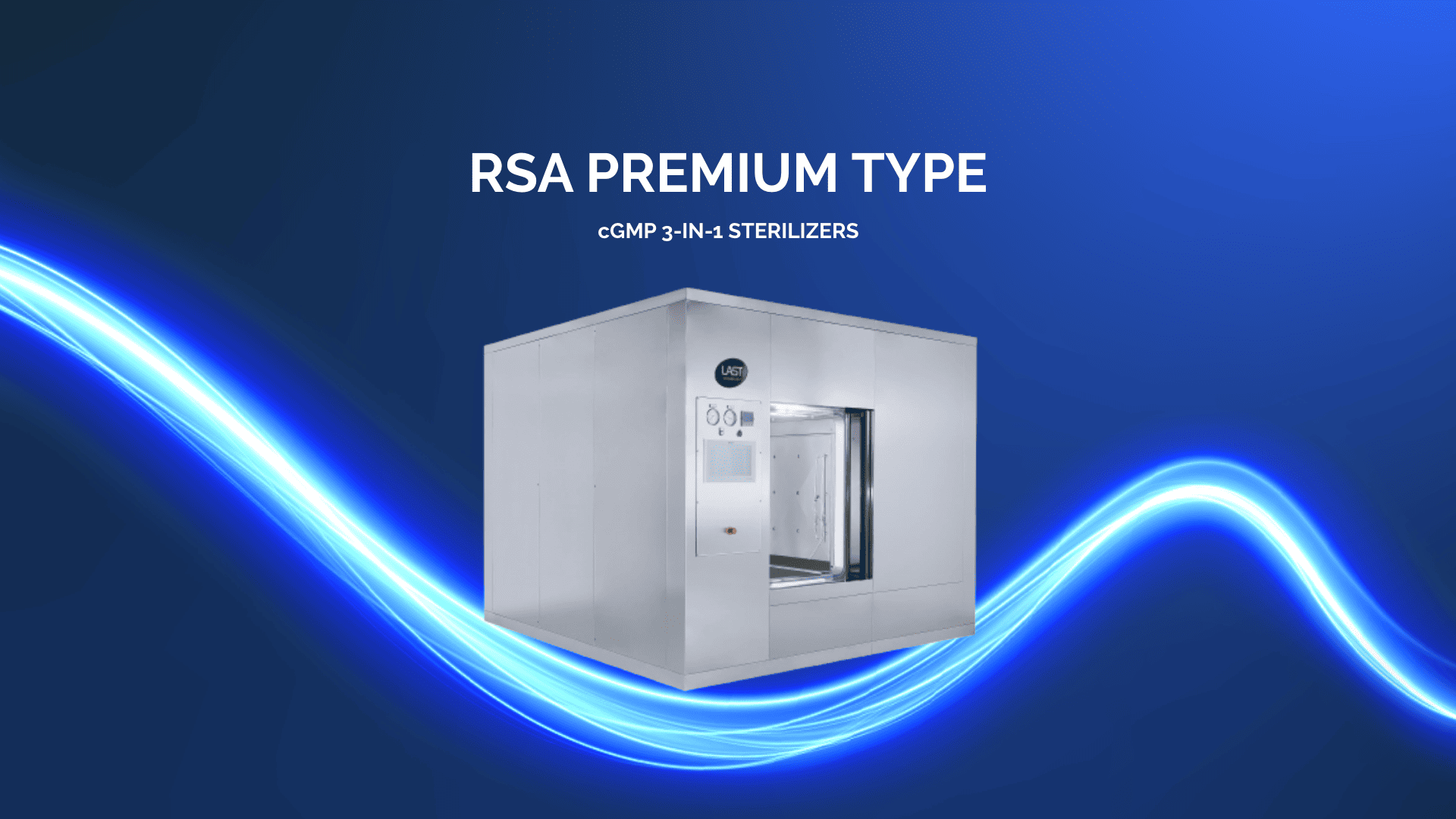
In the high-stakes world of sterile pharmaceutical manufacturing, sterilization is no longer a standalone support phase. It is a critical integrated process that directly impacts patient safety, regulatory compliance, and operational throughput. Modern EU GMP Annex 1 revisions and FDA guidelines now demand a risk-based approach, focusing on maintaining a continuous state of control through fully traceable and validated processes.
In this evolving landscape, the RSA Premium 3-in-1 technology by LAST Technology stands as a premier solution, engineered to address the most complex challenges of terminal sterilization and aseptic processing.
What is RSA Premium 3-in-1 technology?
The RSA Premium 3-in-1 is an advanced cGMP sterilizer that integrates three fundamental phases of the production workflow into a single platform: sterilization, drying, and controlled cooling. This integration is not merely mechanical; it is a logical and functional synergy that drastically reduces manual handling, cleanroom movements, and potential process variability.
Unlike standard autoclaves, the RSA Premium offers the flexibility to operate with three distinct sterilization modes:
- Clean Saturated Steam (for porous and non-porous loads).
- Air/Steam Mixture (for pressure-sensitive packaging).
- Superheated Water (for large volume parenterals).
This versatility allows facilities to manage heterogeneous loads—solids, liquids, and complex packaging—within a single qualification framework, making the system highly defensible during regulatory inspections and audits.
cGMP pharmaceutical sterilization: Requirements and operational challenges
Sterilization aims for the complete destruction of all microbial life, targeting a Sterility Assurance Level (SAL) of 10⁻⁶. However, in cGMP practice, achieving the theoretical SAL is only the baseline. A modern terminal sterilization system must ensure:
| cGMP Requirement | Technical Specification | Operational Impact |
|---|---|---|
| Thermal Uniformity | Homogeneous heat distribution (±0.4°C to ±1°C). | Prevention of “cold spots” and guaranteed uniform sterility. |
| CPP Stability | Rigorous control of Critical Process Parameters (Time, Temp, Pressure). | Cycle repeatability and significant reduction in deviations. |
| Data Integrity | Compliance with FDA 21 CFR Part 11 and ALCOA+ principles. | Total traceability and “audit-proof” batch records. |
| Energy Efficiency | Optimized consumption of steam, water, and electricity. | Lower Total Cost of Ownership (TCO) and improved sustainability. |
By addressing these challenges, combined sterilization offers a real competitive advantage, eliminating the need for multiple machines and reducing the overall cleanroom footprint.
RSA Premium 3-in-1: The strategic dual integration
The “3-in-1” concept is built upon a dual integration designed to maximize productivity:
1. Operational workflow integration
The system manages an automated sequence:
Sterilization → Controlled Drying → Gradual Cooling.
This eliminates downtimes between phases and mitigates the risk of contamination associated with handling wet or hot loads.
2. Process mode integration
The machine adapts to the product, not the other way around:
- Saturated steam (EN 285): Ideal for solids and porous loads (technical garments, stoppers, stainless steel components). It utilizes fractionated vacuum pulses to ensure deep steam penetration.
- Air/Steam mixture: Essential for liquids in sensitive containers (Pre-filled Syringes / PFS, vials, bags). Active counter-pressure control prevents packaging deformation or integrity loss.
- Superheated water: The preferred choice for Large Volume Parenterals (LVP). High-flow water recirculation ensures rapid cycles and superior thermal distribution.
For rubber stoppers, sterilization is only one stage: washing, siliconization and drying decide whether preparation slows the filling line, as covered in our article on RTS and RTU closures.
Terminal sterilization in aseptic processing: The RSA Premium advantage
In the context of aseptic processing, the choice of sterilization technology is a critical factor for final product stability. The RSA Premium is more than just a steam autoclave; it is a combination sterilizer capable of managing complex pharmaceutical decontamination processes.
While systems like the DHS (Dry Heat Sterilizer) focus on depyrogenation (removing pyrogens via dry heat), the RSA Premium excels in the terminal sterilization of finished products. Its ability to switch between steam and air/steam mixture cycles makes it indispensable for aseptic filling lines processing diverse materials, from glassware to sensitive polymers.
Technical deep dive: The 3 sterilization modes
1. Saturated steam sterilization for solids and porous loads
For machine components or heat-stable plastics, the RSA Premium utilizes a fractionated vacuum system.
- PID control: An automatic modulating valve manages steam injection with millimetric precision.
- Condensate management: Continuous evacuation prevents pooling that could compromise thermal uniformity.
- Drying: A final deep vacuum phase ensures a perfect dry load, ready for secondary packaging.
2. Air/Steam mixture for sensitive packaging
In PFS or plastic containers, internal pressure can exceed external pressure during heating, leading to bursts or leaks.
- Integrated ventilation: A fan system mixes filtered air and steam, creating a perfectly homogeneous environment.
- Pressure balancing: The software constantly monitors differential pressure, protecting the integrity of the primary packaging.
3. Superheated water for large volumes (LVP)
Using pharmaceutical-grade water (Water for Injection / WFI or Purified Water / PW) as the thermal vector, this mode is ideal for large bottles or bags.
- Multi-tube Heat Exchangers: Ensure rapid heating and cooling without contact between the service fluid and the product.
- Simplified Validation: The stability of the liquid medium makes thermal mapping exceptionally linear and repeatable.
Combined sterilizer or dedicated autoclaves? How to choose
A 3-in-1 is not always the right choice. It pays off when the value of flexibility and saved space outweighs the benefits of dedicated, very-high-throughput lines. This matrix helps decide.
| Criterion | 3-in-1 sterilizer (RSA PREMIUM) | Dedicated autoclaves |
| Mixed loads | Ideal: solids, porous and liquids in one machine | One machine per load type |
| Variable / multiproduct batches | Maximum flexibility, fast recipe change | Rigid, more changeover downtime |
| Cleanroom space | One qualified footprint | More machines, more classified area |
| Capital and validation | One IQ/OQ/PQ campaign, lower TCO | Costs and qualifications multiplied |
| Very high single-product volume | Possible bottleneck on one chamber | Advantage: parallel dedicated lines |
Rule of thumb: for multiproduct facilities, CDMO/CMO and variable-batch production, the 3-in-1 maximizes equipment utilization; for single-product, very-high-volume manufacturing a dedicated line may still be preferable.
Benefits: TCO, quality and preventive maintenance
Adopting a 3-in-1 platform like the RSA Premium delivers tangible benefits across multiple fronts:
- Operational Efficiency: Replacing three machines with one reduces the cleanroom footprint by up to 60%, freeing up valuable high-grade space.
- Risk mitigation (Quality Assurance / QA): Fewer manual interventions mean a lower probability of human error or accidental contamination.
- Simplified preventive maintenance: A single control system (HMI/SCADA) and a unified spare parts kit reduce long-term management costs. The modular design facilitates technical interventions, minimizing downtimes.
- Sustainability: Heat recovery and cycle optimization reduce energy and water consumption, aligning with modern Green Pharma objectives.
cGMP compliance: An audit-proof cycle
What makes the RSA Premium qualification unassailable during an FDA, EMA, or AIFA inspection?
- Hygienic Design: Internal surfaces with roughness Ra ≤ 0.35 µm, chemically passivated to prevent cross-contamination.
- ALCOA+ Data Integrity: Every batch record is complete, non-editable, and traceable, ensuring maximum data transparency.
- Validation Readiness: Dedicated Tri-Clamp nozzles allow for easy insertion of validation probes without compromising chamber integrity.
- Convergent Floor: Designed for total condensate drainage, eliminating microbial stagnation zones.
- Construction materials: sterilization chamber in AISI 316L for process-fluid contact surfaces, external structures in AISI 304.
- Safety and control instrumentation: safety valves, pressure and level sensors, pressure transducers and temperature probes for precise process control.
- Design conditions: temperature from -10 to +143 °C and pressure from -1 to +3 bar, Category III under PED 2014/68/EU; sterilization operating range 60-134 °C.
Conclusion
3-in-1 sterilization answers one of the most concrete needs in modern pharmaceutical manufacturing: processing different materials, in variable batches, without multiplying machines, space and qualifications. RSA PREMIUM brings this flexibility into a single cGMP chamber, combining saturated steam, air/steam mixture and superheated water with the process control that audits require.
For multiproduct facilities, CDMOs and variable-batch production it is the choice that maximizes equipment utilization and lowers Total Cost of Ownership; where very high single-product volumes are required, dedicated lines remain valid. The rule stays simple: choose the technology according to your load mix and your real constraints of space, validation and capital.
Essential pharmaceutical sterilization glossary
- Terminal Sterilization: Sterilization performed on the product in its final container.
- SAL 10⁻⁶ (Sterility Assurance Level): The probability of 1 in 1,000,000 that a unit is non-sterile.
- Critical Process Parameters (CPP): Variables (T, P, t) essential for process effectiveness.
- ALCOA+: Data principles: Attributable, Legible, Contemporaneous, Original, Accurate.
- WFI / PW: Water for Injection / Purified Water, certified process fluids.

Frequently asked questions on 3-in-1 sterilization
The advantage lies in integration: fewer machines, reduced footprint, lower contamination risks from handling, and centralized data management that simplifies cGMP compliance.
Related posts


mail
Subscribe to our newsletter
Stay up to date with the latest news from LAST Technology