
Newsroom
GMP vs cGMP: The Definitive Guide to the New Pharmaceutical Standard by LAST Technology

In the highly regulated landscape of the pharmaceutical, biotechnology, and medical device industries, quality is not an option but a categorical imperative. Two acronyms — GMP (Good Manufacturing Practices) and cGMP (current Good Manufacturing Practices) — define the benchmark production standards, but understanding their distinction is essential to grasp the modern approach to regulatory compliance and operational excellence.
While GMP establishes the baseline minimum requirements to ensure that products are consistently manufactured and controlled according to quality standards, cGMP introduces a crucial dynamic element: the obligation to adopt the most up-to-date and scientifically validated technologies and systems available on the market. The “c” stands for current and represents both the challenge and the opportunity for companies aiming for market leadership and maximum regulatory compliance, such as LAST Technology.
What Are GMP (Good Manufacturing Practices)?
Good Manufacturing Practices (GMP) are a set of guidelines and requirements governing the manufacturing, control, storage, and distribution processes of pharmaceuticals, cosmetics, medical devices, and food products. Established by the U.S. Food and Drug Administration (FDA), GMP serve as a global regulatory foundation to ensure that products are consistently produced and controlled according to quality standards appropriate for their intended use.
The primary objective of GMP is to ensure that every product is manufactured safely, effectively, and consistently, regardless of batch size or production volume. This is achieved through a systematic approach covering several critical production areas:
- Facility design and maintenance: Production facilities must be designed according to hygienic, reliability, and traceability criteria. Plants must be regularly inspected and subject to preventive maintenance programs to ensure long-term operational performance.
- Equipment qualification: All equipment used in production must be qualified and validated to ensure it performs as intended. This includes regular calibration of measuring instruments and continuous performance monitoring.
- Personnel hygiene and training: Personnel involved in production must be adequately trained and qualified. GMP require ongoing training programs to ensure that all staff understand critical procedures and the rationale behind them.
- Process validation: Before commercial manufacturing begins, processes must be validated to demonstrate consistent product quality. Validation includes prospective and retrospective studies to verify repeatability and robustness.
- Documentation and traceability: Each production phase must be documented in real time. This documentation — known as the Batch Record — provides a complete and traceable history of each batch, essential for deviation investigations and regulatory audits.
- Contamination prevention: GMP place strong emphasis on support processes such as washing, disinfection, sterilization, and depyrogenation, which are essential to prevent contamination and ensure final product safety.
The 10 Fundamental Principles of GMP
GMP are based on ten core principles that together create a robust quality management framework:
- Written procedures and work instructions: All critical activities must be defined in clear, detailed, and unambiguous SOPs (Standard Operating Procedures).
- Strict adherence to procedures: Any deviation must be documented, justified, and approved through a formal change control system.
- Accurate and timely documentation: “If it isn’t written down, it didn’t happen.” Records must be completed in real time with data, signatures, and timestamps.
- Process and equipment validation: Must demonstrate consistent and intended performance before commercial use.
- Facility and equipment design: Must follow hygienic and reliability criteria with preventive maintenance programs.
- Personnel competence and training: Continuous qualification and training are mandatory.
- Contamination prevention: Controls must prevent microbial, chemical, and physical contamination.
- Robust quality control: QA and QC systems must include appropriate testing and evaluation.
- Deviation management: Deviations must be investigated and managed through CAPA (Corrective and Preventive Action).
- Internal audits and continuous improvement: Regular audits must verify compliance and identify improvement opportunities.
What Does cGMP (current Good Manufacturing Practices) Mean?
The term cGMP introduces a key differentiator: continuous updating and dynamic adaptation. The “c” stands for current and emphasizes that manufacturing practices must always be aligned with the contemporary state of scientific and technological knowledge.
According to FDA expectations, cGMP are not static rules but require a proactive, continuously evolving approach. Manufacturers must:
- Adopt modern, validated technologies: Companies must invest in cutting-edge, scientifically validated technologies. Methods and equipment that were considered state-of-the-art ten years ago may no longer be acceptable under current cGMP standards, even if they still comply with baseline GMP requirements.
- Continuously improve production processes: Continuous improvement is not optional but mandatory. Companies must continuously monitor scientific and technological advancements in their field and implement the necessary changes to remain compliant with cGMP requirements.
- Integrate Advanced Monitoring and Control Systems: Real-time monitoring systems and advanced analytics must be implemented to ensure continuous quality control throughout production, not only at the final testing stage.
- Demonstrate a Proactive Risk Management Approach: Companies must implement a Quality Risk Management (QRM) system based on scientific methodologies such as ICH Q9, designed to proactively identify, assess, and mitigate quality risks.
The Three Pillars of cGMP: QRM, Data Integrity, and PAT
cGMP are built on three fundamental pillars that represent the evolution beyond traditional GMP:
-
- Quality Risk Management (QRM): Quality risk management is a systematic approach to identifying, evaluating, and controlling risks to product quality. Rather than relying on a static checklist, companies must apply scientific methodologies to assess the probability and impact of potential quality issues and implement controls proportional to the level of risk.
- Data Integrity: Data integrity is the foundation of cGMP compliance in the digital era. Regulatory authorities require that data meet the ALCOA+ principles (Attributable, Legible, Contemporaneous, Original, Accurate, plus Complete, Consistent, Enduring, Available):
- Attributable: Data must be traceable to the individual who generated or recorded it
- Legible: Data must be permanent, readable, and understandable
- Contemporaneous: Data must be recorded at the time the activity is performed
- Original: Data must be original records or certified true copies
- Accurate: Data must be truthful, correct, and precise
- Complete, Consistent, Enduring, Available: Data must be complete, consistent over time, durable, and readily available for review and audit
- Process Analytical Technology (PAT): PAT represents the shift from “testing quality” to “ensuring quality in real time.” By using advanced sensors, inline analytics, and automated control systems, manufacturers can monitor and control critical process parameters during production, reducing variability and minimizing the need for destructive end-product testing.
Comparative Table: Differences Between GMP and cGMP
| Primary Objective | Product safety and quality | Operational excellence, maximum data integrity, and enhanced regulatory compliance |
|---|---|---|
| Definition | Baseline minimum requirements for pharmaceutical manufacturing | Minimum requirements aligned with the current state of technological and scientific advancement |
| Nature | Static, based on established and historical rules | Dynamic, continuously evolving with scientific and technological progress |
| Primary Focus | Formal compliance and adherence to documented procedures | Continuous improvement, proactive risk management, and technological innovation |
| Technology Approach | Accepts legacy technologies, provided they are validated and functional | Requires the adoption of modern, innovative, and scientifically validated technologies |
| Quality Monitoring | Primarily based on final product testing and retrospective quality control | Based on real-time monitoring, Process Analytical Technology (PAT), and prospective control |
| Data Integrity | Paper-based or digital documentation with manual controls | Automated digital systems with full traceability (ALCOA+) and audit trail |
| Risk Management | Reactive, based on standard procedures | Proactive, based on systematic Quality Risk Management (QRM) |
| Flexibility | Moderate, with standardized procedures | High, allowing adaptations based on scientific evidence |
| Initial Cost | Generally lower | Generally higher due to investment in modern technologies |
| Long-Term Operating Cost | Potentially higher due to inefficiencies | Potentially lower thanks to optimized processes and waste reduction |
Key Differences Between GMP and cGMP
Although GMP and cGMP share the same foundational principles, they present substantial differences in both approach and implementation:
1- Regulatory Compliance Approach
GMP define the minimum requirements necessary to ensure product quality and safety. A company operating under GMP follows established procedures and complies with baseline regulatory requirements. The approach is primarily reactive: the organization responds to regulatory inspections and implements corrective actions when required..
By contrast, cGMP require the adoption of the most up-to-date solutions and the continuous evolution of manufacturing processes. A company operating under cGMP does not simply follow established procedures but actively invests in technological innovation, automation, digitalization, and advanced validation practices. The approach is primarily proactive: the organization anticipates regulatory changes and implements improvements before they become mandatory.
2- Continuous Investment in Technology and Innovation for cGMP Equipment
While GMP allow the use of established and historically validated technologies, cGMP push companies to invest in modern, cutting-edge solutions. This includes:
- Full automation of critical processes to reduce human error
- Implementation of real-time monitoring systems and advanced analytics
- Adoption of digital platforms for data management and traceability
- Use of artificial intelligence and machine learning for process optimization
- Continuous personnel training on new technologies
3- Risk and Quality Management
GMP are based on a standardized and uniform approach: all companies follow the same procedures and controls, regardless of the specific nature of their product or process.
cGMP, by contrast, are based on a risk-based approach: each company evaluates the specific risks related to its product and process and implements controls proportional to the level of risk. This approach is more scientific and allows greater flexibility in implementation.
The Strategic Role of Technology in cGMP Compliance
For a company, achieving cGMP compliance means investing in solutions that not only meet regulatory requirements but also deliver a significant competitive advantage in terms of efficiency, reliability, and quality.
Automation and Digitalization
Process technologies such as full automation and digitalization are essential to bridge the gap between GMP and cGMP. The automation of support processes (washing, sterilization, depyrogenation) is a direct response to cGMP requirements:
- Repeatability and Consistency: Fully automated cycles eliminate human error and ensure that each batch is processed exactly the same way — a fundamental requirement behind the “c” for current. Batch-to-batch variability is minimized, improving process quality and predictability.
- Data Integrity (ALCOA+): Automated control systems automatically record all critical parameters (temperature, pressure, time, humidity, etc.) in real time, ensuring full traceability and data integrity for Batch Record Review. Digital systems with audit trails ensure that no data can be modified without traceability.
- Simplified Validation: Quality-driven engineering solutions facilitate cleaning validation and process validation, reducing commissioning time and operational costs. Automated documentation reduces administrative workload and the risk of documentation error.
Process Analytical Technology (PAT)
PAT is a key element of cGMP that enables real-time monitoring and control of critical process parameters:
- Real-Time Monitoring: Inline sensors and analytical tools provide continuous data on process status, enabling immediate corrective actions when required.
- Variability Reduction: By controlling critical parameters during production, PAT reduces batch-to-batch variability and improves quality consistency.
- Operational Efficiency: By minimizing the need for destructive end-product testing, PAT increases process yield and reduces operating costs.
Why GMP and cGMP Are Strategic for the Future
In an increasingly competitive and highly regulated global pharmaceutical market, operating in accordance with GMP and cGMP means more than simply meeting regulatory requirements — it significantly strengthens corporate reputation and builds trust with customers and regulatory authorities. Companies, such as LAST Technology, that follow these standards are characterized by:
Competitive Advantage
Companies operating under cGMP position themselves as industry leaders and demonstrate a strong commitment to operational excellence. This results in:
- Greater customer trust: Customers know that products are manufactured according to the highest standards
- Access to premium markets: Many markets (e.g., USA, Europe) require cGMP compliance for market access
- Reduced regulatory risk: Proactive compliance lowers the risk of critical inspections and regulatory penalties
- Easier licensing and partnerships: Licensing partners prefer companies that are cGMP-compliant
Sustainability and Efficiency
cGMP also promote sustainability and operational efficiency:
- Waste reduction: Optimized processes and real-time monitoring reduce production rejects and waste
- Energy efficiency: Automation and process optimization lower energy consumption
- Environmental compliance: Advanced monitoring systems ensure adherence to environmental requirements
LAST Technology: A Case Study of Excellence in GMP and cGMP Compliance
To clearly understand how GMP and cGMP principles translate into real technological solutions, it is useful to examine the LAST Technology portfolio — a global leader in the design and manufacture of specialized equipment for washing, disinfection, sterilization, drying, depyrogenation, and decontamination in the pharmaceutical sector.
LAST Technology demonstrates a deep understanding of the distinction between GMP and cGMP through the structure of its product portfolio, organized into two distinct divisions: the Pharma cGMP Division and the Lab cGLP Division. This differentiation directly reflects the core concept that while GMP establish baseline requirements, cGMP require the adoption of the most advanced and scientifically validated technologies available.
LAST Technology cGMP Equipment: Operational Excellence in the Pharmaceutical Sector
Within the Pharma cGMP Division, LAST Technology offers a complete portfolio of specialized equipment that incorporates the core principles of cGMP:
Advanced Washing and Disinfection: The UCW – ACE LINE series represents a significant innovation in combined water–acetone washing, enabling complete disinfection cycles within a single machine. This solution demonstrates how the adoption of modern technologies — combining two solvents in a single cycle — reduces process time and operating costs while maintaining the most stringent cGMP compliance through real-time monitoring and full ALCOA+ traceability.
Additional examples include the UCW – BIN for washing storage containers, the UCW – GLASSWARE/COMPONENTS for glassware and components, and the UCW – ONCO LINE with an isolation system for highly potent drugs. Each of these machines is designed according to Quality Risk Management (QRM) principles, ensuring that implemented controls are proportional to the specific process risk level.
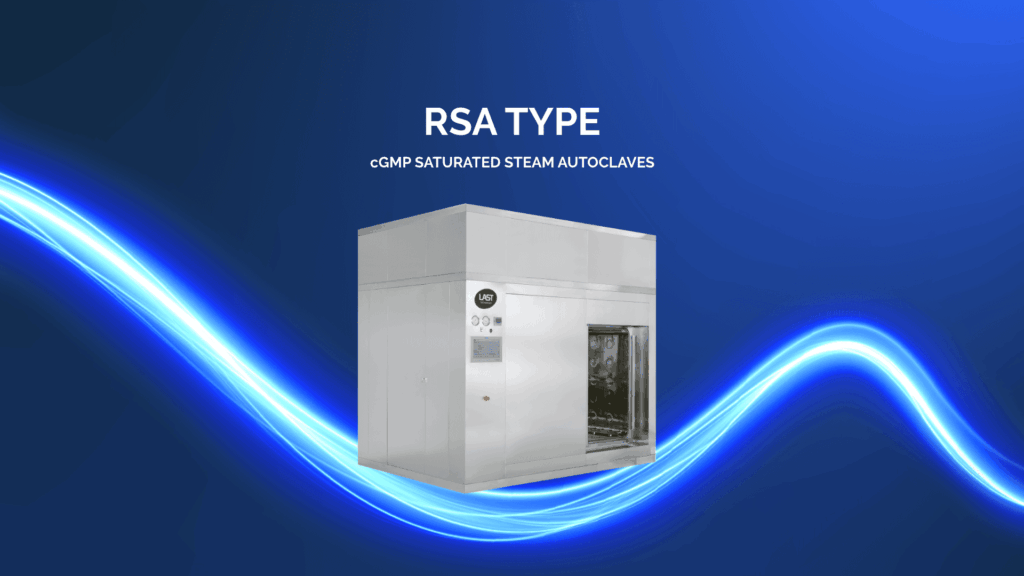
Integrated and Multiprocess Sterilization: The RSA PREMIUM 3-in-1 series is an excellent example of how cGMP drive technological innovation. This equipment integrates three critical functions — saturated steam sterilization, drying, and controlled cooling — within a single unit, significantly reducing cycle times and operating costs compared to traditional multi-machine solutions. cGMP compliance is ensured through pre-validated cycles, real-time monitoring of all critical parameters, and automatic generation of complete batch records.
Additional sterilization solutions include the TS-AS, TS-OW, and TS-ROTO Terminal Sterilizers, which represent different configurations designed to address specific process requirements. The TS-ROTO series, with its rotating load system, demonstrates how continuous technological innovation can improve sterilization uniformity — a critical factor in ensuring product safety.
Specialized Processes: To address specific critical processes, LAST Technology offers:
- DHS (cGMP Dry Heat Depyrogenator): Essential for the removal of endotoxins from injectable components, this equipment demonstrates how cGMP require specialized solutions for critical processes.
- DPB (cGMP Bio-Decontamination Pass-Box): Uses hydrogen peroxide vapor for surface decontamination in controlled environments, reflecting the continuous evolution of pharmaceutical technologies.
- CSG (cGMP Clean Steam Generator): Produces pharmaceutical-grade steam using advanced filtration systems, ensuring cGMP compliance through steam quality monitoring and full traceability.
- TD (cGMP Dry Heat Dryer): Designed for drying components and products, with validated cycles and real-time monitoring.
Integration of cGMP Compliance into Equipment Design
What distinguishes LAST Technology equipment is that cGMP compliance is built directly into the equipment design itself, rather than added as a secondary layer. Each machine incorporates:
Real-time monitoring and ALCOA+ traceability: All critical parameters are continuously monitored and automatically recorded, ensuring compliance with cGMP data integrity requirements.
Pre-validated cycles and complete documentation: Equipment is supplied with pre-validated process cycles and full validation documentation (IQ, OQ, PQ), significantly accelerating customers’ time-to-market.
Flexibility and adaptability: Unlike traditional machines, LAST Technology equipment is designed with a high degree of flexibility, allowing customers to adapt process cycles in response to new scientific findings or regulatory changes.
Integration with quality management systems: Equipment is designed to integrate seamlessly with company QMS platforms, enabling full traceability and centralized quality management.
Conclusions
The choice between GMP and cGMP is not simply a matter of regulatory compliance, but a strategic decision that directly influences a company’s long-term competitiveness and success.
For companies operating in highly regulated markets — such as pharmaceuticals, biotechnology, and medical devices — cGMP compliance has become a de facto standard, not merely a regulatory requirement. Organizations that fail to adopt cGMP risk losing access to premium markets and facing more stringent regulatory inspections. As demonstrated by the example of LAST Technology, industry leaders actively invest in innovative technologies and advanced quality management systems to remain at the forefront of regulatory compliance.
The initial investment in modern technologies and advanced quality management systems is significant, but the long-term benefits — in terms of operational efficiency, reduced regulatory risk, and access to premium markets — far outweigh the upfront costs. LAST Technology’s multiprocess equipment, such as the RSA PREMIUM 3-in-1 series, shows how technological innovation can significantly reduce operating costs while maintaining the highest level of cGMP compliance.
Companies should consider a phased approach to cGMP implementation, starting with critical processes and progressively extending to all aspects of production. This approach reduces risk and supports more effective organizational learning. Partnering with reliable technology providers such as LAST Technology — who deeply understand cGMP requirements and offer pre-validated solutions — can significantly accelerate the transition process.
In conclusion, cGMP compliance is not merely about following rules, but a strategic opportunity for pharmaceutical companies to position themselves as industry leaders, demonstrate a commitment to operational excellence, and gain access to the world’s most profitable and highly regulated markets. Companies that fully embrace cGMP principles, investing in innovative technologies and trusted technology partners, will be well positioned for long-term success in the global pharmaceutical sector.

Related posts


mail
Subscribe to our newsletter
Stay up to date with the latest news from LAST Technology